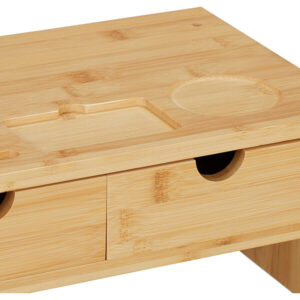
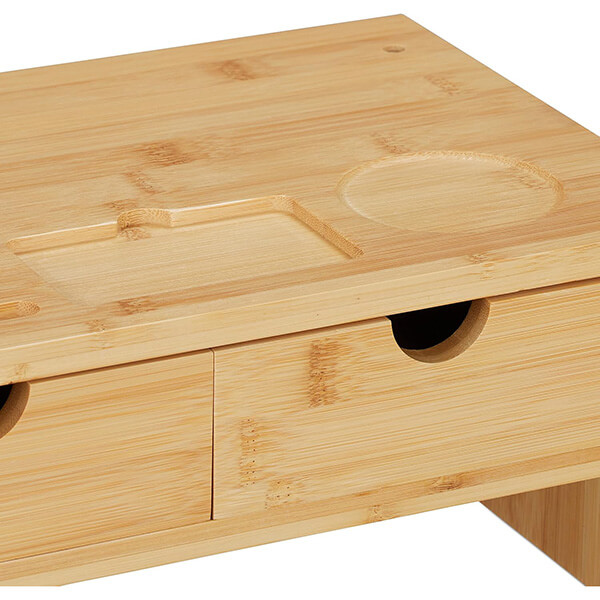
Bamboo can be a good material for desks because it combines durability, a relatively lightweight construction, and a renewable raw material. However, bamboo desks are not without drawbacks. Prolonged moisture can affect the material, the surface can still be scratched, and prolonged UV exposure can cause color changes.
For home offices and other indoor workspaces, bamboo is a practical option if you want a natural-looking desk with good everyday durability.
Key Takeaways
- Bamboo desks offer a combination of hardness, relatively low weight, and a natural appearance.
- Strand-woven bamboo can be considerably harder than common hardwoods, although hardness varies by product and construction.
- Bamboo is not automatically scratch-proof or waterproof; surface finish and construction have a major effect on performance.
- Prolonged humidity and direct UV exposure can affect bamboo surfaces over time.
- Compared with solid hardwood, bamboo can offer a different balance of weight, appearance, sustainability, and maintenance.
What Are the Benefits of Bamboo Desks?
Strong and Durable for Everyday Desk Use
Strand-woven bamboo can have a much higher Janka hardness rating than common oak and maple. Published figures commonly place strand-woven bamboo around 3,000–4,000 lbf, with some products testing above this range. By comparison, white oak is around 1,360 lbf and hard maple around 1,450 lbf on the Janka scale.
| Material | Approx. Janka Hardness (lbf) |
|---|---|
| Strand-woven bamboo | 3,000–4,000+ |
| Hickory | 1,820 |
| Hard maple | 1,450 |
| White oak | 1,360 |
| Red oak | 1,290 |
These figures show why bamboo furniture can resist indentation well.
Lightweight and Easy to Handle
Bamboo can provide a useful strength-to-weight balance for furniture. Depending on the construction and density, a bamboo desktop can be easier to move and handle than a comparable solid-hardwood top.
This can be particularly useful for home offices, adjustable standing desks, and spaces where furniture may need to be moved or rearranged.
Renewable Material With a Natural Appearance
Bamboo is a fast-growing grass that can be harvested on relatively short cycles compared with many conventional hardwood species. Some bamboo species regenerate from established root systems after harvesting, reducing the need to replant each harvested stalk.
Bamboo also gives desks a distinctive natural appearance, with light tones and visible grain patterns that work well in modern and minimalist interiors.
What Are the Drawbacks of Bamboo Desks?
Bamboo is durable, but it is not maintenance-free. The main concerns for indoor desks are surface damage, moisture exposure, and long-term color change.
Scratches and Surface Damage
A hard bamboo surface can resist dents well, but hardness does not make it scratch-proof.
Sharp objects, abrasive materials, or dragging equipment across the surface can damage the finish or leave visible marks. The severity depends on the finish and the construction of the desktop.
Using desk mats, felt pads, and protective coasters can help reduce everyday surface damage.
Moisture and Humidity
Bamboo is not waterproof. Changes in humidity can cause bamboo furniture to expand and contract, and prolonged moisture exposure can contribute to swelling, surface damage, or dimensional changes.
For a desk, occasional spills are generally manageable when cleaned promptly, especially when the surface has an appropriate protective finish. The bigger concern is repeated or prolonged exposure to moisture.
Keep bamboo desks away from persistent damp conditions and avoid allowing standing water to remain on the surface.
UV Exposure and Color Changes
Bamboo can change color when exposed to UV light. Research on bamboo photodegradation shows that ultraviolet radiation can trigger chemical changes involving lignin and other components, leading to surface discoloration. Depending on the material and exposure conditions, bamboo can shift toward red, yellow, or lighter weathered tones over time.
If color consistency matters, avoid placing the desk in prolonged direct sunlight or use curtains, blinds, or UV-filtering window treatments.
How Does Bamboo Compare With Other Desk Materials?
Bamboo vs. Oak and Maple
Bamboo and solid hardwood offer different combinations of performance, appearance, and maintenance.
| Factor | Bamboo | Oak or Maple |
|---|---|---|
| Hardness | Strand-woven types can be very hard | High, but varies by species |
| Weight | Depends on construction and density | Generally heavier for comparable solid tops |
| Appearance | Light, modern, distinctive grain | Traditional hardwood grain |
| Moisture | Requires protection from prolonged moisture | Also requires moisture control |
| Refinishing | Depends on construction and wear layer | Solid wood is generally easier to refinish |
| Sustainability | Renewable raw material with potentially short growth cycles | Longer tree growth cycles |
| Cost | Varies by construction and finish | Wide range depending on species and grade |
For buyers who want a traditional hardwood appearance and the ability to refinish the desktop over many years, solid oak or maple may be more suitable.
Bamboo can be attractive when the priorities are a lighter-looking natural material, distinctive appearance, and a renewable raw-material base.
Bamboo vs. MDF
MDF is usually less expensive and is widely used in budget desks, but it behaves differently from bamboo.
| Factor | Bamboo | MDF |
|---|---|---|
| Surface durability | Generally good, especially with dense constructions | Depends heavily on the surface coating |
| Moisture resistance | Sensitive to prolonged moisture | Can swell significantly when exposed to water |
| Appearance | Natural bamboo grain | Usually depends on laminate, veneer, or paint |
| Material feel | Natural solid-material feel | More uniform engineered-board feel |
| Sustainability | Renewable bamboo feedstock | Uses processed wood fibers and resins |
| Price | Usually above basic MDF desks | Often lower-cost |
Bamboo is not automatically better than MDF in every situation. A well-finished MDF desktop can provide excellent surface resistance, while a poorly constructed bamboo desk can still have problems with moisture, joints, or finishing.
The better choice depends on the construction, surface finish, expected use, and budget.
FAQ
Is Bamboo Good for a Standing Desk?
Yes. Bamboo can work well for standing desks because it provides a relatively rigid desktop surface without the weight of some solid-hardwood tops. The suitability also depends on the thickness, support structure, and frame used with the desktop.
Can You Put a Monitor Arm on a Bamboo Desk?
Yes, but the mounting method matters. A clamp-style monitor arm should be compatible with the desktop thickness and construction, while a heavy-duty arm may require additional reinforcement. Check the manufacturer’s recommended load and mounting limits before installation.
How Do You Clean a Bamboo Desk Without Damaging It?
Use a soft, slightly damp cloth to remove everyday dirt, then dry the surface rather than leaving moisture on it. Avoid abrasive cleaners and excessive water, and follow the care instructions provided for the specific finish.