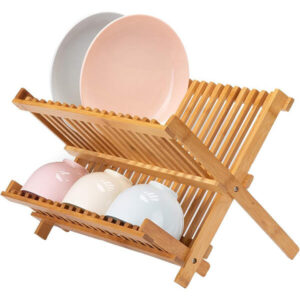
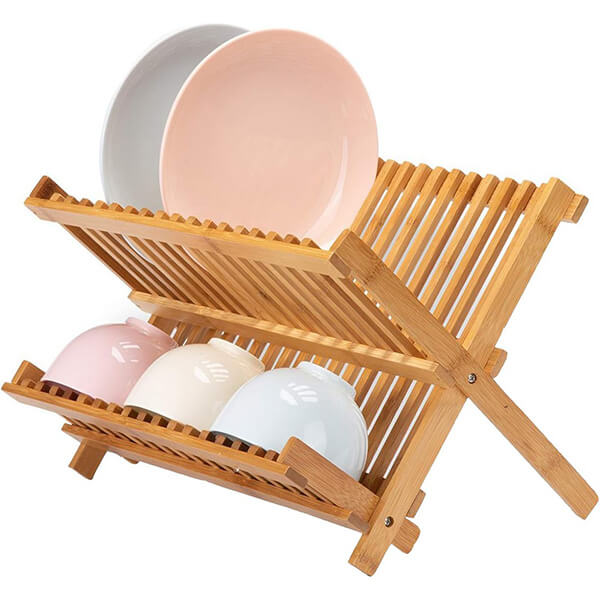
Yes, bamboo can be a great material for a dish rack — if you choose a well-designed model and follow basic care practices. The biggest concern most shoppers have — mold growth — is rarely a failure of bamboo itself, but a result of poor drainage design. Bamboo has natural antimicrobial properties and exceptional eco-friendly benefits, making it a strong choice for kitchens where sustainability and natural aesthetic are priorities.
Key Takeaways
- Bamboo has natural antimicrobial properties, but trapped moisture will still cause mold — design matters more than material.
- Bamboo dish racks work well only when designed with raised feet, a removable drip tray, and full disassembly for airflow and cleaning.
- Choose bamboo for eco-friendliness and natural style; choose stainless steel or diatomaceous stone for lower maintenance.
The Big Concern: Do Bamboo Dish Racks Get Moldy?
Mold is the top worry for people considering a bamboo dish drying rack, and the short answer is: it can, but it doesn’t have to.
Mold grows wherever moisture is trapped for long periods. Bamboo itself has natural antimicrobial compounds that slow bacterial and fungal growth on its surface. However, these defenses cannot overcome constant exposure to standing water. Mold on bamboo dish racks almost always comes from:
- Flat bases sitting directly on the counter, trapping water underneath
- Fixed, non-removable drip trays that hold moisture against the bamboo frame
- One-piece construction that hides water and food residue in joints and crevices
A well-designed rack eliminates these trapped moisture points, so mold is not an inevitable issue with bamboo dish racks. Poorly made cheap models, on the other hand, often develop mold within weeks.
What Makes a Good Bamboo Dish Rack?
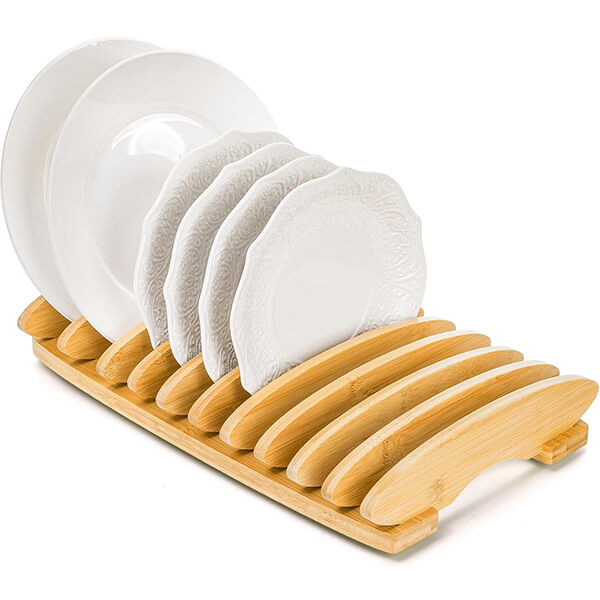
Three non-negotiable features separate sanitary, long-lasting bamboo dish racks from mold-prone ones:
1. Raised Feet
Elevated feet lift the entire rack off the countertop, allowing free airflow underneath the base. This constant air movement dries the bottom of the rack quickly, preventing the dark, damp environment where mold thrives. Racks that sit flat on the counter trap water underneath and almost always develop mold faster.
2. Removable Drip Tray
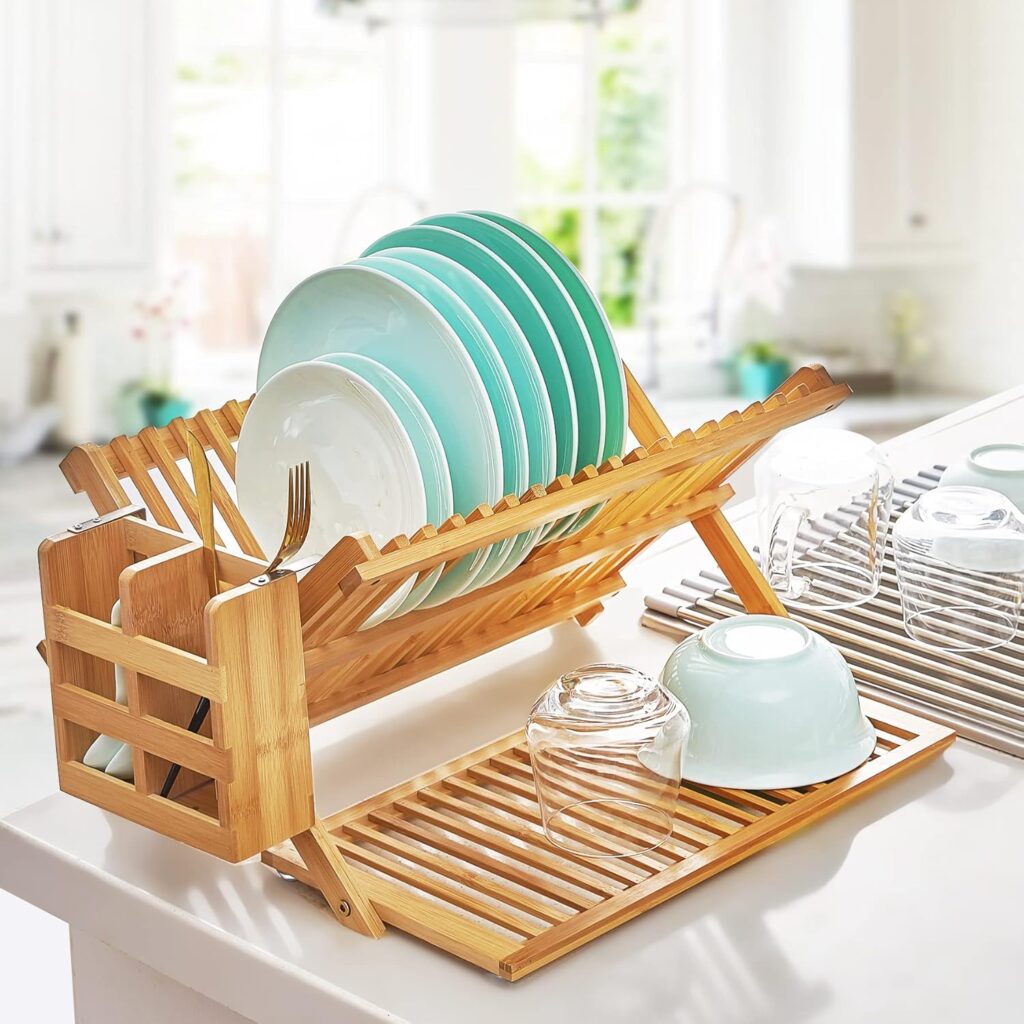
A separate, slide-out drip tray catches runoff water away from the bamboo frame itself. You can empty and dry the tray separately, so moisture never sits against the wood. Glazed ceramic or thick food-grade plastic trays work best. Fixed, non-removable trays are one of the biggest design flaws for bamboo dish racks.
3. Full Disassembly
A rack that comes completely apart lets you scrub every slat, joint, and corner during deep cleaning. No hidden moisture or food residue gets trapped to feed mold growth. One-piece racks may look simpler, but they hide dirt and water in hard-to-reach spots, leading to musty smells and mold over time.
Bonus: Sealed/Oil Finish
A smooth, sealed or oiled surface finish repels water, preventing absorption, swelling, and darkening of the bamboo. You can refresh this protective layer at home with monthly mineral oil treatments.
Bamboo vs. Other Dish Rack Materials
| Material | Pros | Cons | Best For |
|---|---|---|---|
| Bamboo | Natural antimicrobial properties, eco-friendly, warm natural aesthetic, lightweight | Requires monthly oiling and regular drying; mold risk with poor design | Eco-conscious users, natural kitchen style lovers |
| Stainless steel | Heavy-duty, easy to wipe clean, naturally bacteria-resistant | Can show water spots; may rust over time with prolonged water exposure | Busy households, high-traffic kitchens |
| Diatomaceous stone | Ultra-fast drying, naturally absorbent, very low maintenance | Fragile; cracks easily under heavy weight or impact | Users prioritizing zero maintenance above all |
Is a Bamboo Dish Rack Right for You?
A bamboo dish rack is a great choice if:
- You prioritize sustainable, low-carbon kitchen products
- You prefer a warm, natural aesthetic over industrial-looking metal
- You’re willing to follow a simple regular care routine
It may not be the best fit if:
- You want completely zero-maintenance kitchenware
- You use your dish rack multiple times daily in a very high-traffic household
- You frequently leave wet dishes sitting for extended periods
FAQ
How long do bamboo dish racks last?
A well-designed, well-cared-for bamboo dish rack lasts many months to years of daily use. Cheap, poorly designed models with bad drainage can develop mold within weeks. Build quality and care routine are the biggest factors in lifespan.
Does bamboo naturally resist mold?
Bamboo has natural antimicrobial properties that slow the growth of some bacteria and fungi. However, it cannot resist mold on its own when moisture is constantly trapped. Drainage and airflow are more important for mold prevention than the material itself.
How do I keep my bamboo dish rack from molding?
Choose a rack with raised feet and a removable drip tray. Dry the rack fully after each use, apply mineral oil monthly, and disassemble regularly for deep cleaning. Good design and consistent care prevent almost all mold issues.
Is bamboo more sanitary than plastic dish racks?
Bamboo has natural antimicrobial properties that plastic does not. However, both materials can grow mold if moisture is trapped. Proper design and cleaning are bigger factors for sanitation than the base material.
Are bamboo dish racks eco-friendly?
Yes. Bamboo is a fast-renewable resource with very low production emissions, and it biodegrades naturally at the end of its life. It is one of the most sustainable materials available for kitchenware.