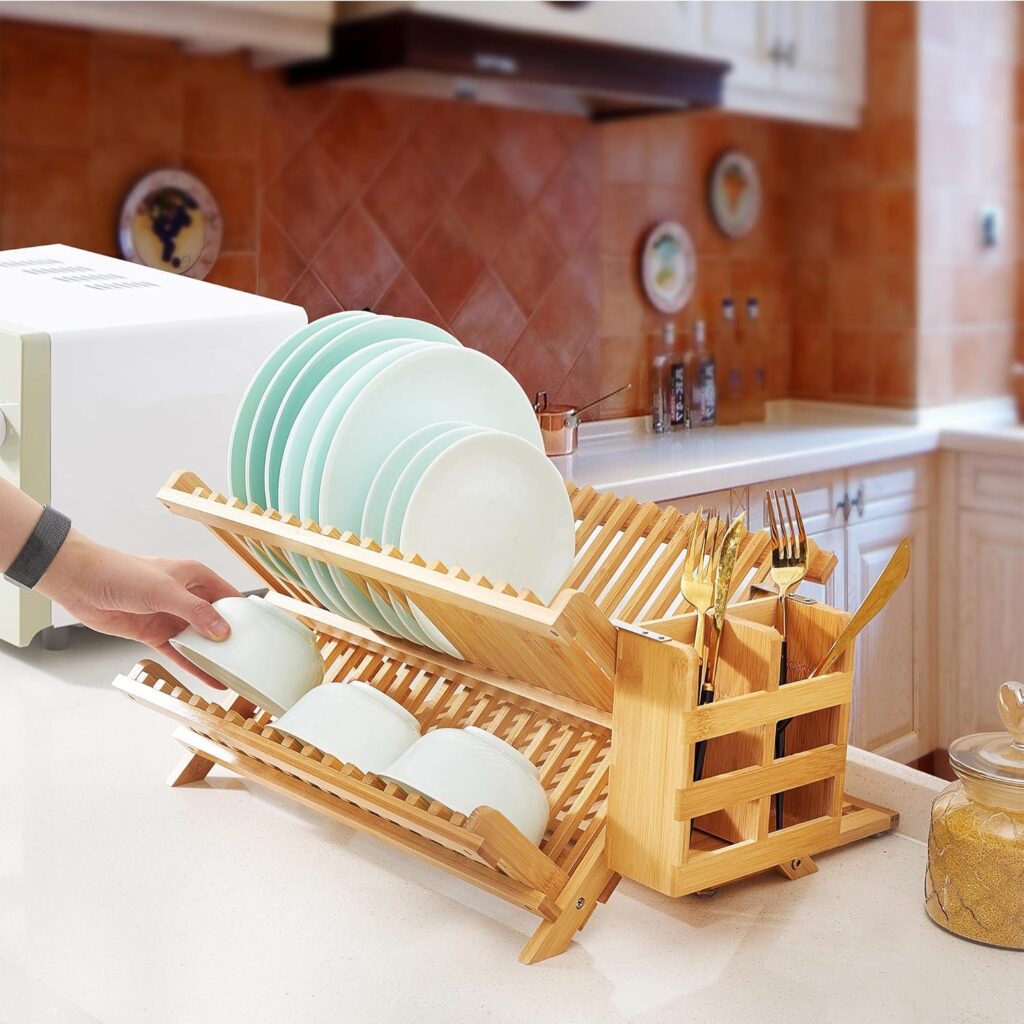
If you’re shopping for a new dish rack, you’ve probably noticed how popular bamboo options have become. They look clean and natural, and they’re often promoted as eco-friendly—but that doesn’t automatically mean they’re hygienic.
Bamboo dish racks can be sanitary when used and maintained properly, but they also come with risks like moisture buildup and mold if neglected. Understanding how bamboo behaves—and how to care for it—makes all the difference between a clean drying setup and a hidden hygiene problem.
Key Takeaways
- Bamboo dish racks can be hygienic when kept clean and fully dry
- Natural compounds like lignin and bamboo quinone give bamboo mild antimicrobial properties
- Moisture is the biggest risk—poor drying can lead to mold and bacterial growth
- Design matters: racks with good drainage and airflow stay cleaner for longer
- Regular maintenance, including daily drying and weekly deep cleaning, is essential
- Compared to plastic and metal, bamboo offers a strong balance of hygiene, durability, and eco-friendliness
Key Factors That Affect Bamboo Dish Rack Hygiene
Natural Antimicrobial Advantage
Bamboo’s natural germ-fighting ability is not just marketing hype—it’s backed by peer-reviewed research:
| Study | Key Findings |
|---|---|
| 2012 Journal of The Textile Institute | Moso bamboo contains lignin, a structural compound that disrupts bacterial cell membranes and inhibits growth by up to 60% |
| Japanese University Study | Bamboo shoot extracts suppressed growth of Staphylococcus aureus and Escherichia coli by 90% in lab tests |
| Independent Comparison Study | Bamboo demonstrates broad-spectrum antimicrobial activity against both bacteria and fungi |
These natural compounds, called bamboo-kun (bamboo quinone) and lignin, are present in all parts of the bamboo plant. They help the plant resist pests and disease in nature, and these benefits carry over to bamboo kitchen products.
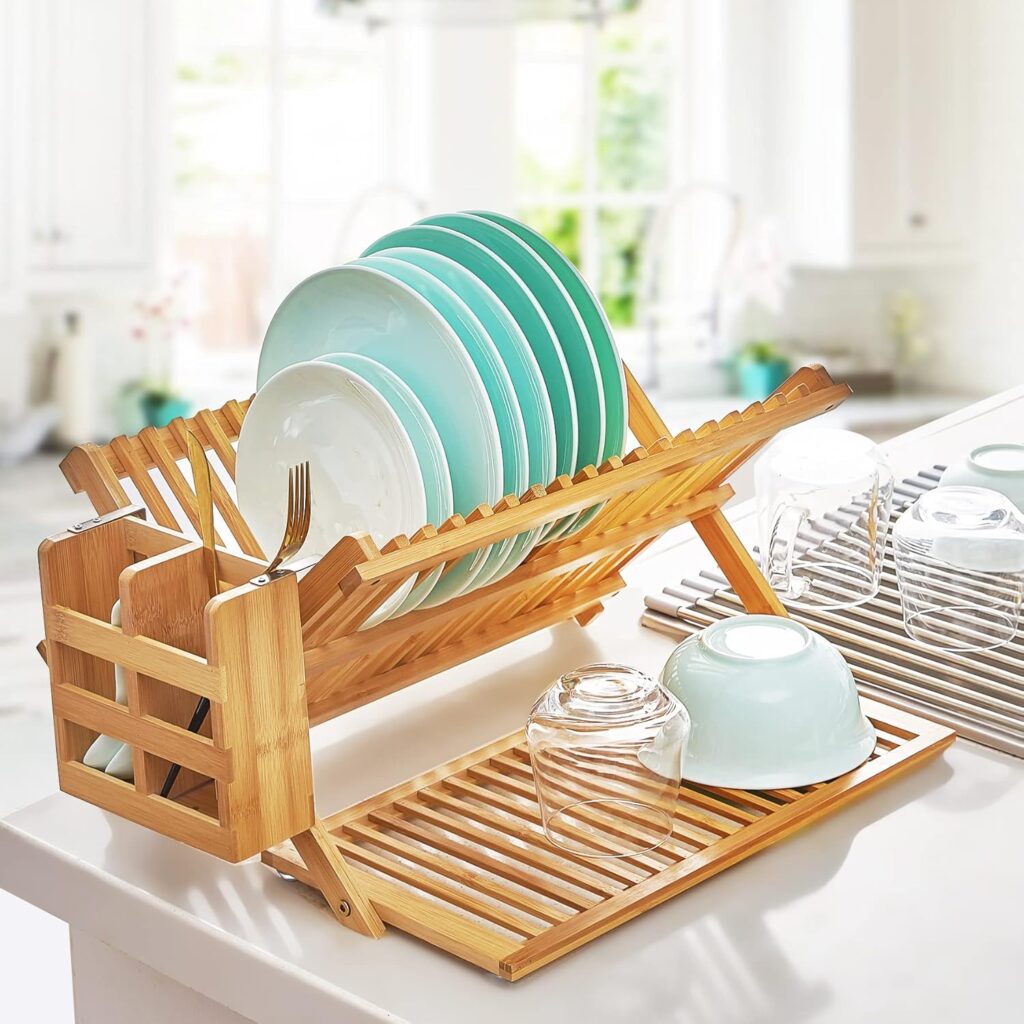
The YESUN Bamboo Kitchen Storage Rack harnesses this natural power. Its solid bamboo construction retains the plant’s inherent antimicrobial properties, providing an extra layer of protection for your dishes.
Moisture Resistance and Limitations
Bamboo is naturally more water-resistant than many types of wood, but it is still a porous material. It can absorb moisture from the air and from wet dishes, a property known as hygroscopicity, which directly affects how hygienic it remains over time.
The table below shows the key factors that influence hygiene:
| Factor | Impact on Hygiene |
|---|---|
| Material Porosity | Bamboo absorbs small amounts of water, which can harbor bacteria if not dried properly |
| Drainage Design | Racks with sloped surfaces and wide gaps dry much faster than flat, dense designs |
| Environmental Humidity | High humidity kitchens require more frequent cleaning and drying |
Critical Note: Bamboo’s antimicrobial properties only work when the rack is dry. A wet bamboo rack will grow mold and bacteria just like any other material.
How to Keep Your Bamboo Dish Rack Clean and Safe
Daily Cleaning and Drying Routine
To keep your bamboo dish rack hygienic, a simple daily routine makes a big difference. After each use, remove all dishes and empty the drainage tray, then wipe the rack with a damp cloth and a small amount of mild dish soap. Make sure the rack is left open in a well-ventilated area so it can dry completely. Avoid placing wet dishes on a damp rack, as trapped moisture can quickly lead to mold growth.
Weekly Deep Cleaning
In addition to daily care, a deeper clean every 1–2 weeks helps prevent bacteria and mold buildup. Disassemble the rack if possible and soak removable parts in a solution of one part white vinegar to four parts warm water for 15–20 minutes. Use a soft brush to gently scrub away residue, then rinse thoroughly and allow everything to dry completely. Whenever possible, place the rack in direct sunlight, as UV exposure helps naturally disinfect and reduce microbial growth.
Pro Tip: Sunlight is a natural disinfectant. Drying your bamboo rack in the sun for 1–2 hours once a week will kill mold spores and bacteria.
What to Do If Mold Appears
If you notice small spots of mold, act quickly to prevent it from spreading. Scrub the affected area with a baking soda and water paste, then wipe it down with vinegar to eliminate remaining spores. Dry the rack completely in direct sunlight. If mold keeps returning or has spread extensively, it’s best to replace the rack to maintain proper hygiene.
Bamboo Dish Rack Comparison
Bamboo vs. Other Dish Rack Materials
| Property | Bamboo Dish Rack | Stainless Steel (304) | Plastic Dish Rack |
|---|---|---|---|
| Natural Antimicrobial | Yes | No | No |
| Lifespan (Proper Care) | 2–3 years | 10+ years | 1–2 years |
| Best Sanitization Method | Vinegar soak, air dry | Alcohol wipe, steam clean | Bleach solution |
| Eco-Friendliness | Excellent | Good | Poor |
| Scratch Resistance | Good | Poor | Very poor |
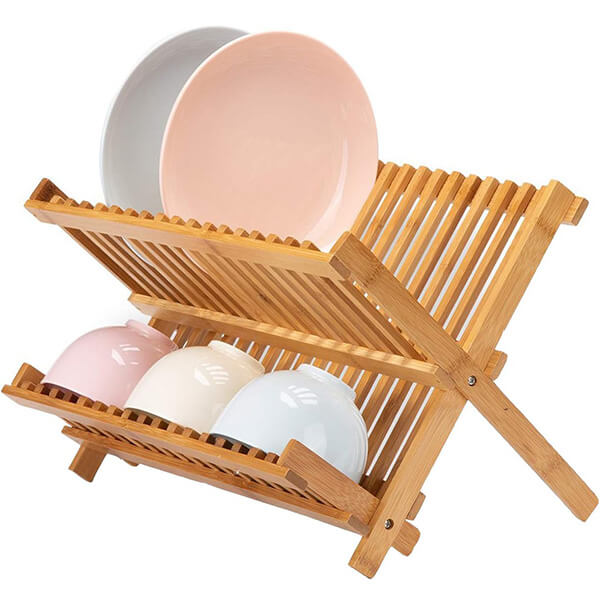
Bamboo offers the best balance of hygiene, aesthetics, and environmental friendliness. While stainless steel lasts longer, it lacks bamboo’s natural antimicrobial properties and requires just as much maintenance to prevent mold.
Eco-Friendly Benefits of Bamboo
In addition to their hygiene benefits, bamboo dish racks are a much more sustainable choice:
- Bamboo grows 3–5 times faster than trees and can be harvested every 3–5 years
- It requires no pesticides, fertilizers, or irrigation to grow
- It absorbs 5 times more carbon dioxide and produces 35% more oxygen than trees
- It is 100% biodegradable at the end of its life
Choosing bamboo products over plastic or stainless steel products helps reduce your carbon footprint and create a healthier home environment.
Conclusion
Bamboo dish racks are a safe and hygienic choice when used properly. Their natural antimicrobial properties provide a helpful advantage, but they are not a substitute for good cleaning habits. The key factor is moisture control—keeping the rack dry is what ultimately determines whether it stays clean or becomes a source of mold and bacteria.
With simple daily care and regular deep cleaning, a bamboo dish rack can remain sanitary, functional, and environmentally friendly. If you want a natural, sustainable option for your kitchen, bamboo is a solid choice—as long as you’re willing to maintain it correctly.
FAQ
Are bamboo dish racks safe for food contact?
Yes. High-quality bamboo dish racks from reputable brands like YESUN are made with 100% natural bamboo and non-toxic, food-safe finishes. They do not release harmful chemicals and are completely safe for drying clean dishes.
How often should I clean my bamboo dish rack?
Wipe down the rack and empty the drainage tray after every use. Do a deep clean with vinegar once every 1–2 weeks, or more often if you live in a very humid climate.
Can bamboo dish racks go in the dishwasher?
No. The high heat and prolonged water exposure in a dishwasher will warp, crack, and damage bamboo. Always hand wash your bamboo dish rack with mild soap and warm water.
How do I choose a sanitary bamboo dish rack?
Look for these features:
- Wide gaps between slats for good airflow
- Sloped surfaces that drain water away
- A removable drainage tray
- Solid bamboo construction (not particle board)
- A smooth, splinter-free finish
How long do bamboo dish racks last?
With proper care, a good quality bamboo dish rack will last 2–3 years. Replace it if you notice deep cracks, warping, or persistent mold that cannot be removed.