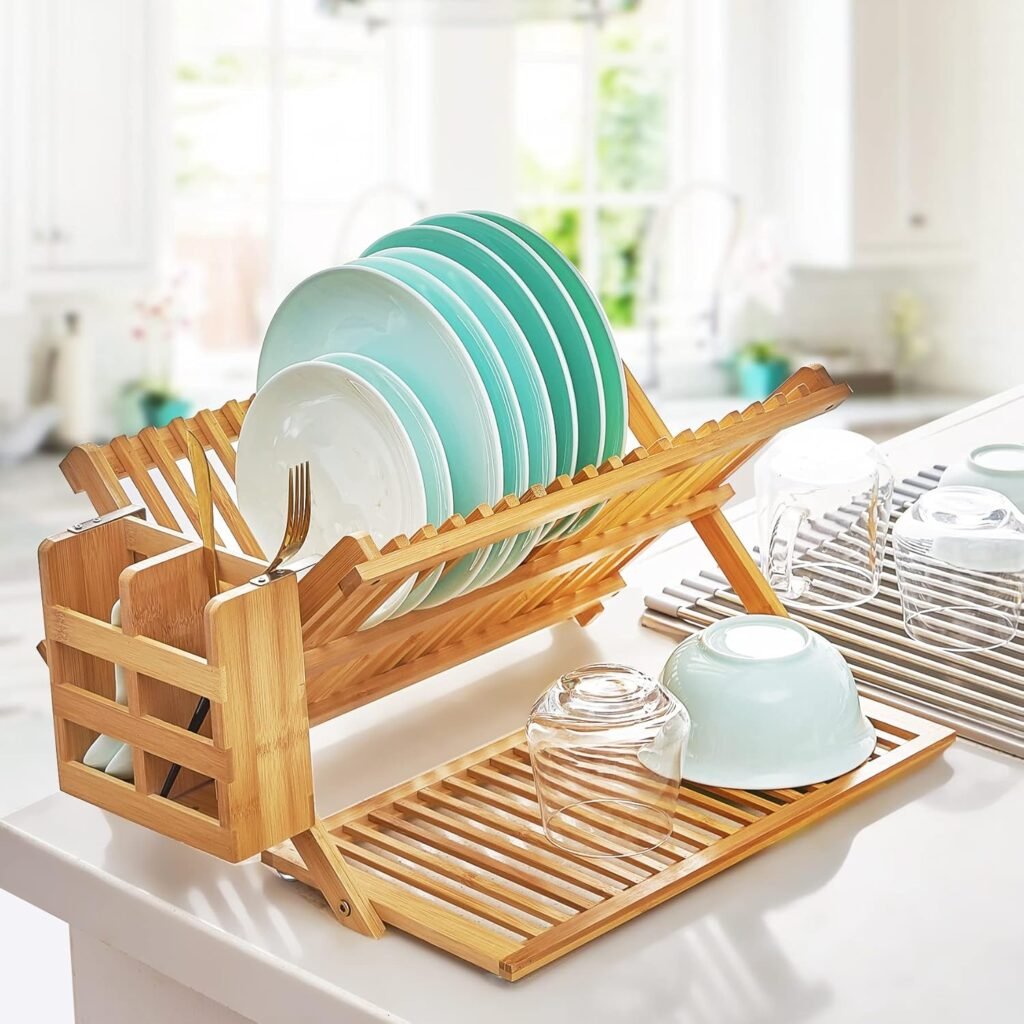
Well-cared bamboo dish racks typically last 2–5 years with regular daily kitchen use. Exact lifespan varies widely based on bamboo quality, construction standards, moisture exposure, and daily care habits. Moisture is the single biggest threat to durability: a rack left consistently damp can develop mold in under 2 months.
This guide breaks down expected service life, key factors that cause wear, simple maintenance habits to extend use, and clear signs it’s time for replacement.
Key Takeaways
- Bamboo dish racks last 2–5 years with proper care and regular drying.
- Constant moisture is the top cause of early wear, mold, and structural damage.
- Dense bamboo, tight joinery, and sloped drainage designs extend lifespan significantly.
- Wipe the rack dry after each use and seal the surface periodically for maximum longevity.
- Replace the rack if you see full structural cracks, spreading joint gaps, or deep mold that cannot be removed.
Typical Lifespan of Bamboo Dish Racks
With normal daily use and basic after-use care, most bamboo dish racks serve a household for 2–5 years. This range assumes regular wiping, good airflow, and proper loading.
Neglect drastically shortens service life. A rack left damp with standing water in joints and trays can grow visible mold and develop musty odors in under 2 months. Water seeps into the bamboo grain, causing swelling, warping, and dark staining over time. This wide variance is why two households with the same rack can report very different lifespans.
As a material, bamboo is fast-growing and renewable — Moso bamboo culms mature in 3–5 years and regrow after harvesting. But field growth speed does not translate directly to product lifespan. Finished rack durability depends on how the bamboo is dried, milled, joined, and finished.
What Affects Bamboo Dish Rack Lifespan?
Bamboo Quality & Construction
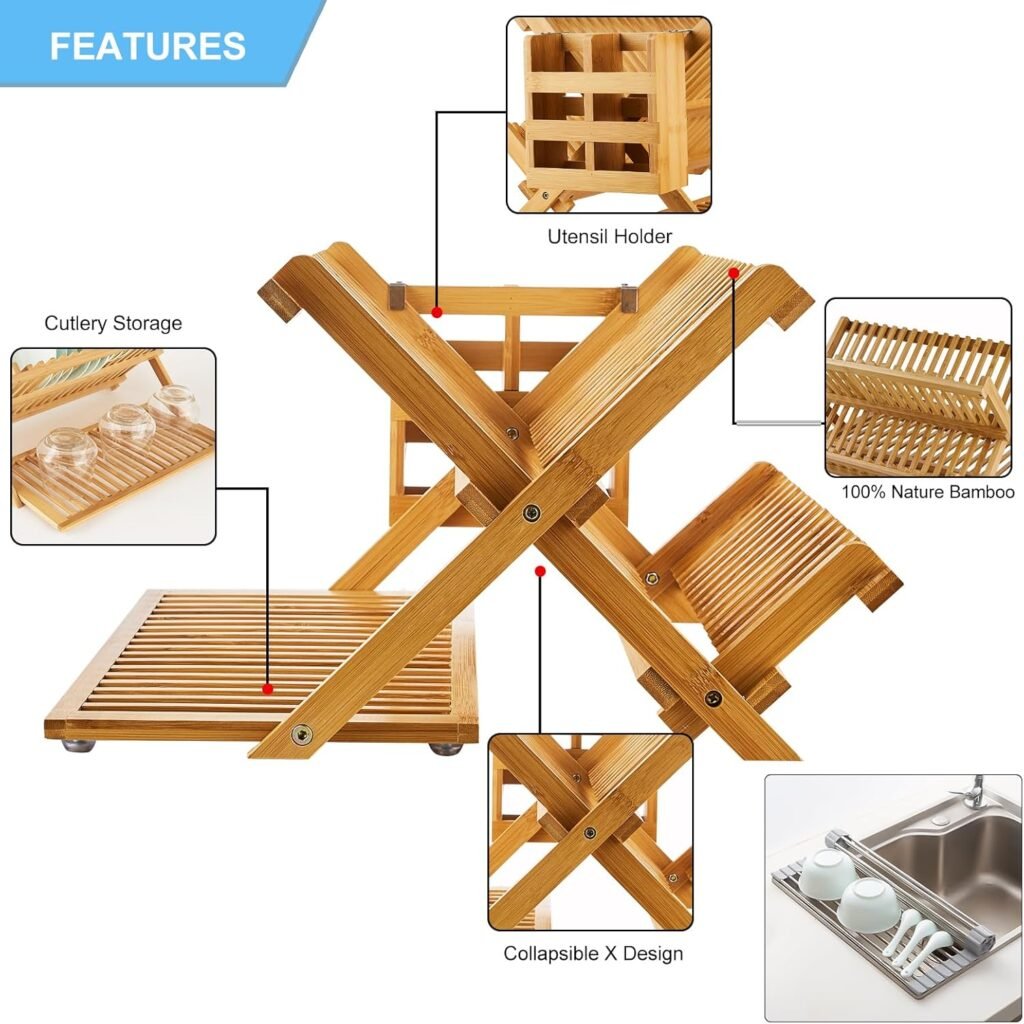
Material grade sets the upper limit for durability. Dense, straight-grain Moso bamboo resists water uptake far better than soft, low-density stock. Construction details also have a major impact:
- Tight mortise-and-tenon joints prevent wobble and stop gaps from forming where water can collect.
- Sloped drainage troughs shed water before it can soak into the bamboo, rather than flat trays that trap puddles.
- Thicker slats hold shape under full loads and keep joints tight; thin slats flex and open gaps for water to seep in.
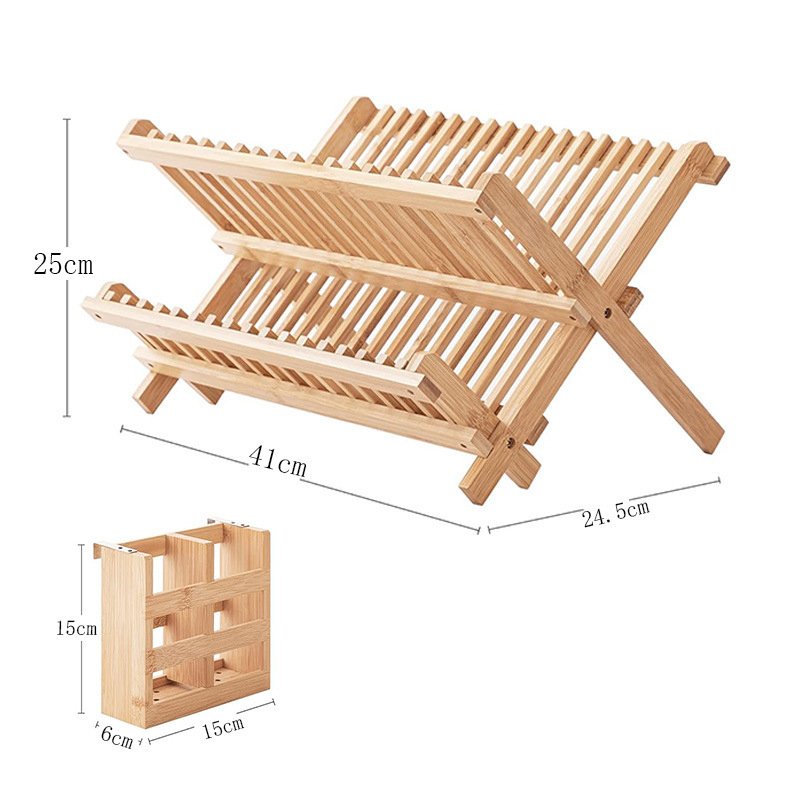
For reference, YESUN’s FSC-certified bamboo dish racks include design features built for durability: a 7° sloped drainage trough with 12mm V-groove, an 8mm raised 3D grid for 360° airflow (cutting water absorption by over 60% vs. flat trays), 25kg load capacity per tier, and reinforced joints with stainless steel clips.
Moisture Exposure & Daily Use
Water is the primary enemy of bamboo dish racks. Trapped moisture in joints and grooves creates conditions for mold and bacterial growth, and breaks down bamboo fibers over time.
Other use-related factors that shorten lifespan:
- Uneven heavy loading that bends the frame and opens gaps
- Flat tray designs that hold standing water instead of shedding it
- Poor airflow around the rack that slows drying
- Humid kitchen environments that extend drying time
Daily habits are the biggest variable. A user who towel-dries the rack after each load removes surface moisture before it seeps in, adding years of service. A rack left damp through weekends will degrade much faster.
Maintenance Tips to Extend Lifespan
Daily Care & Storage
A few simple daily habits extend lifespan more than any protective coating:
- Wipe down the rack with a soft dry cloth after each use to remove surface water and food residue.
- Wash gently with warm soapy water periodically, then dry completely before use.
- Keep drainage troughs clear of food debris to prevent standing water.
- Avoid soaking the rack fully in water for long periods.
- Store in a dry, well-ventilated area; foldable racks stored in a cabinet dry faster than those left out in damp corners.
Sealing & Repairs
Periodic treatment with food-safe bamboo oil or sealant refreshes the surface’s water resistance. Reapply as the finish wears thin to help the rack shed water faster and resist stains.
Minor issues can be repaired to extend life: loose clips, clogged drain grooves, and light surface wear can be fixed with cleaning, tightening, or light sanding and resealing. For small problems on a sturdy rack, repair is often cheaper than replacement.
Signs It’s Time to Replace Your Dish Rack
Bamboo shows clear warning signs before failure. Replace the rack if you notice any of these:
- Full-thickness structural cracks on weight-bearing parts (shelves, support slats), which create safety risks.
- Severe warping that remains even with proper placement and loading.
- Joint delamination or spreading gaps that worsen with use, or that affect weight-bearing structure.
- Deep mold growth that has penetrated the wood structure and cannot be fully removed.
Surface cracks, minor stains, light roughness, and small loose parts do not require replacement — they can usually be fixed with sanding, resealing, or tightening.
FAQ
Can a bamboo dish drying rack grow mold?
Yes. A rack left consistently damp can develop mold in under 2 months. Wipe the rack dry after each use and keep drainage paths clear to prevent growth.
Does the finish on a dish rack affect how long it lasts?
Yes. A food-safe sealant slows water absorption and helps the surface shed moisture. Reapply as the finish wears thin to extend lifespan and resist stains.
What makes one bamboo dish rack last longer than another?
Dense FSC-certified Moso bamboo resists water uptake best. Tight mortise-and-tenon joints, sloped drainage troughs, and raised airflow grids also drastically extend service life by reducing water exposure.
How often should you inspect a bamboo dish rack?
Twice per year is ideal. Check joints, edges, and drainage grooves for cracks, looseness, or blockages. Early fixes are low cost and prevent larger damage.
When does repair stop making sense for a bamboo dish rack?
Surface cracks, minor stains, and small loose parts respond to sanding and resealing. Full structural cracks, spreading joint gaps, or deep mold damage mean replacement is safer and more cost-effective than repeated repairs.