Yes, a bamboo dish rack can grow mold under consistent damp, poorly ventilated conditions — but mold is entirely preventable with basic daily care. Bamboo’s natural organic structure and porous fiber texture mean it holds moisture and contains trace sugars and starches that feed mold spores. With simple drying, ventilation, and sealing habits, most bamboo dish racks stay mold-free for years.
Key Takeaways
- Bamboo dish racks can develop mold when left damp for extended periods, but the issue is fully preventable.
- Wipe the rack completely dry after each use and empty drip trays daily to eliminate standing water.
- Maintain airflow on all sides of the rack; avoid pushing it flush against walls or into tight corners.
- Seal bamboo every few months with food-safe oil to block moisture penetration and protect the grain.
- Clean early mold spots with soap, vinegar, and water; replace the rack if mold returns repeatedly or cracks form.
Why Bamboo Dish Racks Develop Mold
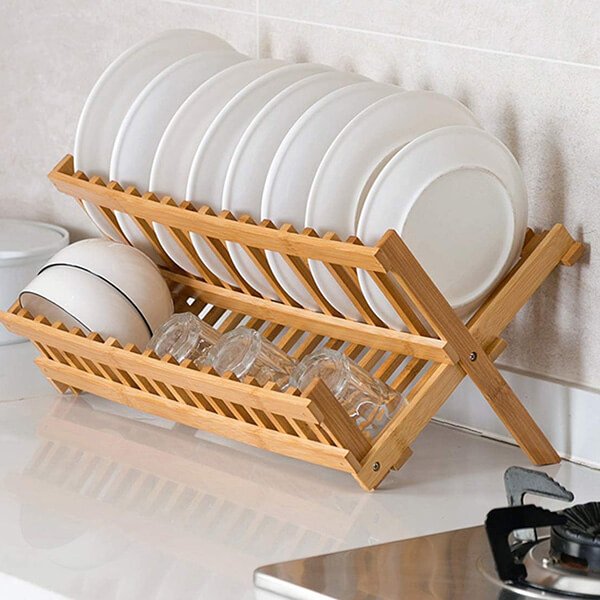
Mold grows on bamboo when two core factors align: the material’s natural organic composition provides food for spores, and trapped moisture creates the damp environment spores need to thrive.
Natural Organic Nutrient Source
Bamboo is a plant-based material that naturally contains small amounts of sugar, starch, and protein — compounds that act as food for mold spores. This is not a flaw in the material, just a property of its organic structure. Dry bamboo gives spores little to feed on, so mold rarely develops on fully dry, clean racks.
Moisture-Trapping Fiber Structure
Bamboo’s porous fibers absorb and hold water, especially at exposed end grain, joints, and grooved surfaces. These hard-to-reach spots trap water during washing and use, creating long-lasting dampness where spores can settle and grow. Seams, recesses, and undersides are the most common starting points for mold, as they dry slowest and are often missed during cleaning.
Conditions That Speed Up Mold Growth
Three conditions turn a clean rack into a mold-friendly environment:
- Poor airflow: Tight corners or racks pushed flush against walls block air circulation, so moisture never fully evaporates.
- Warm, humid kitchens: Steam from cooking and high ambient humidity speed spore germination and growth.
- Food residue: Trapped bits of food, grease, and sauce feed spores and hold moisture in rack grooves and joints.
How to Prevent Mold on a Bamboo Dish Rack
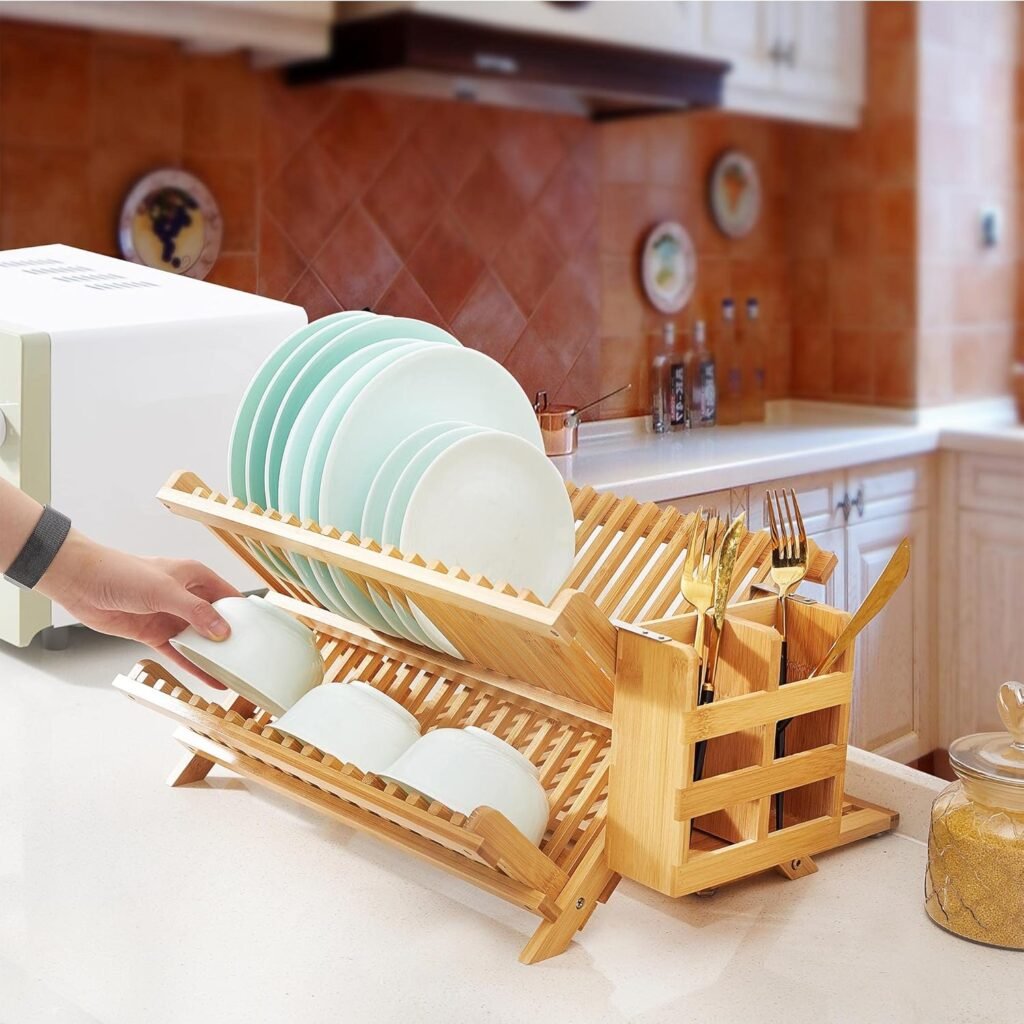
Preventing mold comes down to two core habits: eliminating standing moisture, and sealing the bamboo’s surface to block water penetration.
Dry & Ventilate After Every Use
Moisture is the single biggest mold trigger, so drying is the most important step:
- Wipe the entire rack with a soft absorbent towel immediately after washing dishes.
- Stand the rack upright in an open, well-ventilated spot so air circulates across all surfaces.
- Empty drip trays daily to prevent standing water from evaporating into the rack’s lower slats.
- Clean food residue from joints and grooves weekly to eliminate spore food sources.
- Leave space on all sides of the rack; avoid tucking it into tight corners or pushing it flush against a wall.
Seal & Condition Bamboo Regularly
Untreated bamboo dries out and cracks over time, creating gaps where moisture and mold can take hold. Conditioning with food-safe oil creates a protective barrier that repels water and keeps fibers flexible:
- Make sure the rack is fully clean and dry before applying any treatment.
- Apply tung oil, linseed oil, or beeswax evenly with a soft cloth, let soak, then wipe off excess.
- Reapply every 2–3 months, or whenever the bamboo looks dry or faded.
- Avoid synthetic varnishes, which can crack and peel with repeated water exposure.
Design Features That Reduce Mold Risk
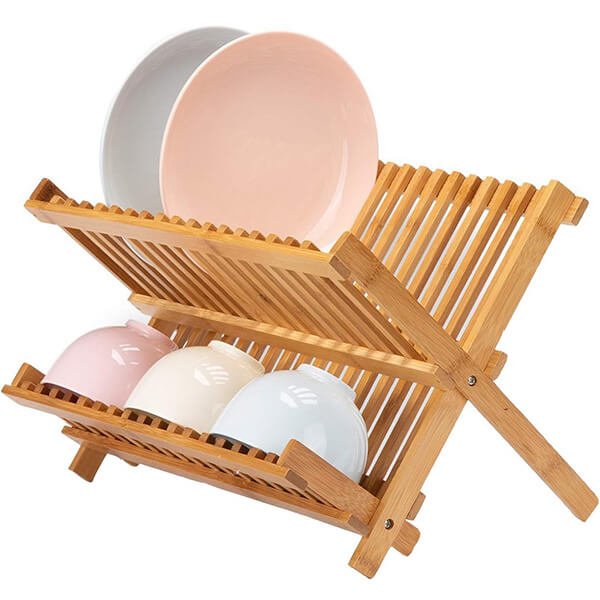
Well-designed bamboo dish racks reduce mold risk by minimizing standing water. For example, YESUN bamboo dish racks use a 7° sloped drainage trough with a 12mm V-groove to channel water into the sink, plus an 8mm elevated 3D grid that promotes 360° airflow and cuts water absorption by over 60% compared to flat trays. Reinforced tight joints also reduce gaps where water and food can get trapped.
Bamboo vs. Other Materials: Mold Risk Comparison
| Material | Mold Risk | Key Pros | Key Cons |
|---|---|---|---|
| Plastic | Low | Light, low cost, easy to clean | Can warp with heat, stain over time |
| Metal | Lowest | Durable, rigid, water-resistant | Can rust if coating wears thin |
| Silicone | Low | Flexible, heat-resistant | Soft surface can trap food residue in micro-cracks |
| Bamboo | Moderate (with proper care) | Sturdy, natural aesthetic, durable | Requires regular drying and conditioning |
Bamboo has a moderate baseline mold risk, but with basic care it performs comparably to other materials while offering a warmer, natural look. It is best suited for kitchens with good airflow and users willing to follow a simple maintenance routine.
What to Do If Mold Appears
Clean Early Mold Spots
Early surface mold does not ruin the bamboo rack. Remove it with common household supplies:
- Wipe the entire rack with warm, mild dish soap and a soft sponge, scrubbing gently at seams and grooves.
- For stubborn spots, make a baking soda paste, apply, and scrub gently with a soft-bristle brush.
- Spray with a 1:1 mixture of white vinegar and water, let sit 5 minutes to kill remaining spores.
- Rinse thoroughly with warm water.
- Pat dry completely with a towel, then air-dry fully in a well-ventilated area before use.
When to Replace the Rack
Replace the rack if:
- Mold returns repeatedly after multiple cleanings (meaning it has grown deep into the bamboo grain).
- Cracks or splits develop at hinges or joints, which trap moisture permanently and are impossible to fully dry.
FAQ
Do wooden or bamboo dish racks get moldy?
Yes, both can grow mold. Bamboo contains sugars and starches that feed spores, and its porous fibers trap moisture. Damp joints and grooves are the most common starting points. Fully dry, well-maintained bamboo rarely develops mold.
How do I prevent mold on a bamboo drying rack?
Wipe the rack dry after every use, empty drip trays daily, and maintain airflow on all sides. Condition the bamboo with food-safe oil every few months to seal the grain. Check joints often in hot, humid kitchens.
Can vinegar remove early mold spots?
Yes. Vinegar kills surface mold spores. Scrub spots gently, apply a 1:1 vinegar-water solution, let sit, then rinse and dry the rack completely. Pay extra attention to seams and recesses, where mold often hides.
When should I replace a moldy bamboo dish rack?
Replace the rack if mold keeps returning after repeated cleanings, or if cracks develop at hinges and joints that trap moisture permanently. Fresh racks are low-cost compared to the hassle of recurring mold growth.