The best way to store spices in a drawer is to dedicate a single drawer to spices, use uniform airtight jars with clear top-facing labels, and arrange jars in a single layer in a consistent order (alphabetical or by usage frequency). This setup turns cluttered drawer space into a fast, functional system built around three core pieces: matched containers, clear labels, and a logical layout.
Uniform jars eliminate wasted gaps and keep the collection scannable at a glance. Clear lid labels let you identify every spice from above without lifting a single jar. A logical layout keeps your most-used seasonings within easy reach. Together, they create a long-lasting spice organization system tailored to your cooking habits.
Key Takeaways
- Dedicate one drawer exclusively to spices to keep the collection organized and easy to navigate.
- Use uniform, airtight jars with clear labels printed on the lids for fast top-down identification.
- Arrange jars in a single layer, sorted alphabetically or by frequency of use.
- Store the spice drawer away from direct heat and light to preserve flavor and extend shelf life.
- Start with a basic expandable insert that fits your drawer, and add more units as your collection grows.
Why Drawers Work for Spice Storage
Visibility & Easy Access
A fully extended pull-out drawer brings every jar to eye level. With labels facing up, you can scan the entire collection at a glance without lifting or rearranging containers. Flat inserts keep labels readable from above, while tiered risers angle back rows toward you for even better visibility.
Drawers also keep spices close to your cooking zone without cluttering counter space. Unlike deep cabinet shelves that hide jars at the back, a shallow pull-out puts every jar within easy reach.
Space Efficiency
Drawer storage frees up valuable counter space occupied by countertop racks. A standard pull-out insert can hold 5–60+ jars depending on width, far more than wall racks (15–20 jars) or lazy susans (15–20 jars) in the same footprint. Storing spices inside a drawer also protects them from heat and light, helping them stay fresh longer.
How to Organize Your Spice Drawer
Single Layer, Labels Up
The golden rule of drawer spice storage: one single layer, no stacking. Jars sit side by side so every lid is fully visible from above. Labels go on the center of each lid, so you can read them at a glance without picking up the jar.
Keep label styling consistent: same font, text size, and label position across every jar. For most home kitchens, the spice name alone is enough. If you buy in bulk or refill often, add purchase/refill/best-by dates. Keep text short and scannable.
Sorting System
Pick one sorting system and stick with it:
- Alphabetical order: Reliable, scalable system ideal for collections over 12 jars. Go straight to the correct section with no searching.
- By frequency of use: Keep daily staples at the front, baking spices in one zone, savory blends in another. Works best for small, frequently used collections.
Drawer Organizer Options
Expandable inserts are the easiest way to set up a spice drawer. They widen to fit your exact drawer width with no measuring or cutting required. Most include compartments or tiers to keep jars upright and visible.
- CILRIAL organizer: Expands 10.5–21 inches, with built-in room for measuring spoons.
- KES stainless steel rack: Available in 10.25-inch and 13.25-inch sizes, expandable to 26.5 inches; holds ~7 4-oz jars per tier.
- Yesun Bamboo Drawer Organizer: 5-to-8 compartment expandable design, FSC-certified Moso bamboo with food-safe water-resistant finish.
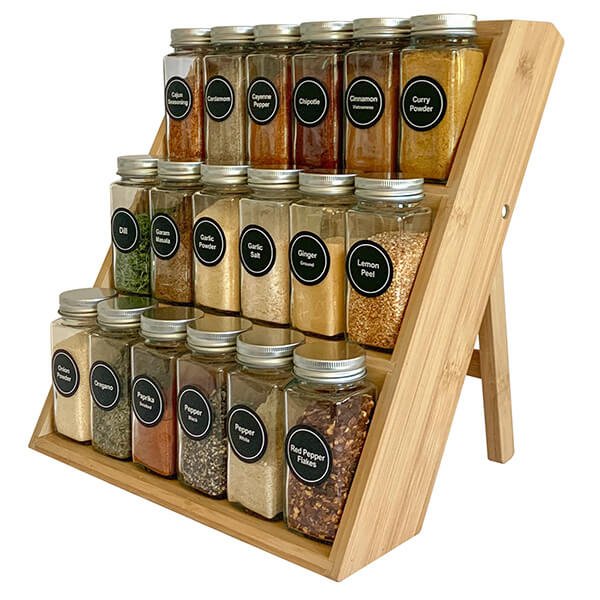
Basic tray inserts drop right into the drawer with no installation. Tiered risers lift back rows for better label visibility, and gripper clips hold slim jars in place to prevent sliding.
Fit the System to Your Drawer
Start with two measurements before buying anything:
- Count your jars to find total required capacity.
- Measure your drawer’s inner width, depth, and height.
Leave 1–2 cm of clearance above the tallest jar, and enough depth for the insert to slide fully out without hitting the door or hardware. A wide, shallow drawer near the cooking area works well for 20–40 main spices. Flexible-slot organizers work best for collections with mixed jar sizes.
Compare Other Storage Methods
| Format | Best Placement | Typical Capacity |
|---|---|---|
| Wall rack | Wall near stove | 15–20 jars |
| Lazy Susan | Cabinet/pantry shelf | 15–20 jars |
| Drawer insert | Standard kitchen drawer | 5–60+ jars |
For most households, a split system works best: keep 15–20 daily-use spices in a drawer organizer near the stove, and store backup stock in a higher-capacity pantry rack.
Protect & Maintain Spice Freshness
Keep It Cool, Dark & Dry
Heat and light break down the essential oils that give spices their flavor. A closed drawer blocks most light, which helps preserve color and flavor. For best results:
- Store at 50–70°F, away from stoves, dishwashers and steam.
- Keep the drawer in a cool, dark, dry spot.
- Use opaque jars for extra light protection for light-sensitive spices.
Whole spices last 2–3 years in proper conditions; ground spices last 1–2 years.
Backstock & Refill Routine
Keep sealed backup packages in a separate cabinet space. Date all backstock containers and use first-in, first-out rotation: put new stock behind older stock, and use the oldest first. Label backstock bins clearly with contents and expiration dates.
FAQ
Do spice jars need to be airtight for drawer storage?
Yes. Airtight seals with silicone gaskets lock out humid air, slow flavor loss, and prevent clumping. Spices stay fresh significantly longer in properly sealed jars.
Where should the spice drawer go in the kitchen?
Keep it away from the stove and direct heat/steam. A cool, dark spot near the cooking area works best. Heat and temperature fluctuations shorten spice shelf life.
Should labels go on the lids or the sides of jars?
Lid labels work best for drawer storage, so you can read them from above without lifting jars. Front labels work better for upright shelf storage.
How do you organize spices as your collection grows?
Add additional insert units as your collection expands. You can sort alphabetically or by frequency of use. Stick to one consistent system to keep every jar easy to find.