
Setting up a spice rack streamlines kitchen workflow: pull-out or bamboo options free counter space, keep all jars visible, and simplify cooking. You can choose a ready-made unit or build a DIY version, select weight-rated hardware, customize the layout for your spice collection, then complete installation. A well-designed spice rack saves cooking time, keeps your kitchen tidy, and protects spice flavor. Start with a simple plan, measure carefully, and enjoy easy access to your seasonings.
Key Takeaways
- Choose a prefabricated spice rack for fast installation, or build a custom DIY rack to fit irregular cabinet spaces.
- Measure cabinet dimensions and your spice jars before purchasing materials or cutting lumber.
- Select full-extension, ball-bearing drawer slides rated to support the full weight of loaded spice jars.
- Label all jars and place your most-used spices at the front for quick access.
- Tiered and adjustable designs keep back-row jars visible and maximize cabinet storage.
How to Choose the Right Spice Rack Setup
Prefab vs. DIY Spice Racks
Your first decision is whether to buy a ready-made rack or build a custom unit, based on cabinet size, budget and available time.
When a Prefab Rack Makes Sense
Prefab racks deliver fast installation with no power tools required. They are ideal for kitchens with standard cabinet sizes.
YESUN’s Bamboo Spice Rack is a strong ready-made option, crafted from FSC-certified Moso bamboo. Deep carbonization treatment prevents warping and cracking in humid kitchens. The surface uses FDA and LFGB food-safe coating; bamboo’s natural antibacterial properties reduce odor buildup, and the sealed finish resists oil, dust and moisture for simple cleaning.
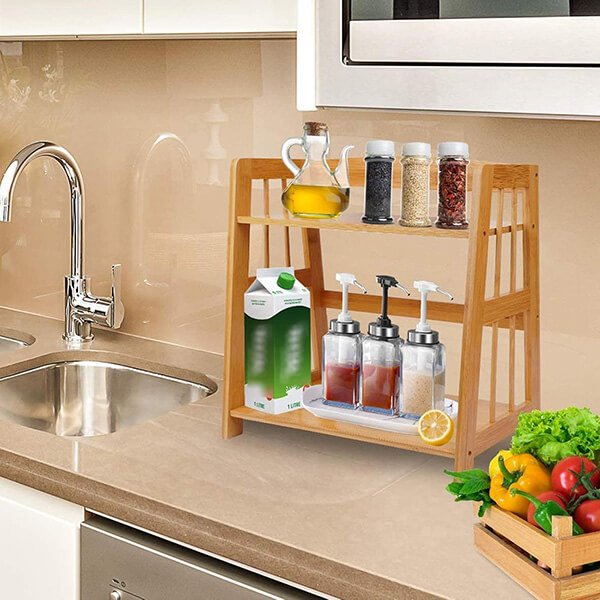
Product configurations cover diverse kitchen layouts: compact 2-tier countertop racks for small kitchens, tall 3-tier models for cabinet vertical storage, wall-mounted units to clear counter space, and cabinet drawer inserts for hidden tidy storage. Selected models feature adjustable width to fit a range of cabinet openings. YESUN also supports OEM/ODM customization for commercial buyers, with custom dimensions, branding, packaging and low MOQ for bulk orders.
When to Build a Spice Rack
DIY construction works best for non-standard cabinet sizes, such as narrow shelf gaps or unusually deep drawers where prefab products cannot fit. A DIY rack using basic lumber can cost less than premium prefab alternatives, though it requires tools including a saw, drill and sandpaper, plus several hours of work. Builders fully control materials and finishes, matching existing cabinetry with bamboo plywood, solid oak or reclaimed wood, paired with food-safe oil, polyurethane or paint.
Sizing the Rack for Your Spice Collection
Design your rack around your spice jars. Most households own 20–40 spice jars; avid home cooks may have 60+. Standard jars stand roughly 4 inches tall with a 2-inch diameter, while bulk containers can reach 6 inches tall or more. Build tiered shelves with variable heights to accommodate mixed jar sizes.
For pull-out cabinet inserts, measure the cabinet’s inner width, depth and height. Pull-out racks typically need 1 inch of side clearance for smooth sliding.
- Narrow base cabinet filler strips: 3–9 in width
- Pantry door-mounted racks: 18–24 in width Standard pull-out spice inserts fit 6–12 inch cabinet openings; 9-inch widths are most versatile for home kitchens. Countertop racks require flat counter space; wall-mounted racks need clear wall space away from upper cabinets. Adjustable-width racks like YESUN’s models eliminate the need for full custom fabrication for slightly irregular openings. Always measure twice before ordering or cutting materials.
How to Prepare the Space & Select Hardware
Measuring Cabinet Space and Clearance
Confirm cabinet interior width, depth and height. Check for obstructions: cabinet hinges, appliance doors or nearby handles can block pull-out movement. Verify cabinet walls and shelves are solid and level; reinforce thin or loose panels before mounting. For pull-out racks, match slide length to cabinet depth. Full-extension slides let the rack pull completely out, giving access to jars at the back. Height determines how many tiers you can fit.
Choosing Mounting Hardware
Drawer slides are the core hardware for pull-out racks.
- Side-mount slides: Easy to install, great for retrofit projects.
- Under-mount slides: Hidden beneath the rack for a clean aesthetic, requires precise alignment.
- Ball-bearing slides: Smooth, quiet movement with high weight capacity.
Pick slides with a weight rating higher than your total loaded jar weight to avoid sagging. Use matching screws for your cabinet material (wood screws for solid wood/plywood; machine screws for metal cabinets). Keep a level and pencil handy to mark mounting holes before drilling.
How to Install a Spice Rack
Countertop & Wall-Mounted Racks
Countertop racks simply sit on a flat, heat-free surface near your cooking area. Wall-mounted racks need a stud finder and drill. Mark bracket positions, level the rack, then fasten screws into wall studs or drywall anchors. Both styles install quickly with minimal tools.
Pull-Out Cabinet Spice Rack Installation
- Verify the rack matches your cabinet opening dimensions.
- Mark slide mounting positions on cabinet walls.
- Mount slides to the cabinet frame, then attach the spice rack insert.
- Have a helper hold the rack steady during alignment.
- Test sliding motion before loading jars.
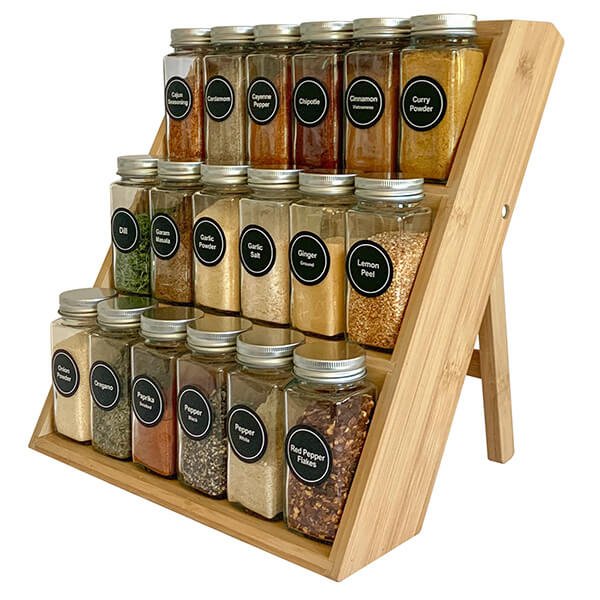
Once installed, organize your spices. Switch to uniform jars and add labels on every lid. Tiered designs lift rear jars into view, so nothing gets hidden deep in the cabinet.
How to Organize and Customize Your Spice Rack
Arranging Spices for Easy Access
Group spices by usage. Keep daily favorites in the front, backup containers toward the back, with labels facing outward. Salt, pepper and frequently used oils sit in the middle for fast grabbing. You can sort alphabetically or separate savory and sweet blends. Pull-out racks expose all jars at once, eliminating blind spots.
Tiered & Adjustable Shelf Designs
Tiered, staircase-style shelves make every jar visible. Adjustable shelf heights fit both short tins and tall bottles.
| Design | Organizational Benefit | Customization Benefit |
|---|---|---|
| Non-slip 3-tier organizer | Prevents bottles from tipping, clean cabinet storage | Fixed tiered layout |
| Adjustable wall-mount rack | Frees counter space via wall/door installation | Adjustable shelf height for mixed jar sizes |
| Two-tiered spinner | Full visibility and one-handed access | Rotating storage |
| Expandable wooden rack | Heavy-duty, high-capacity storage | Expandable staircase layout |
| Stackable iron frame | Flexible for changing spice collections | Reconfigurable as 2×2-tier or one 4-tier unit |
For DIY builders: Draft woodworking plans first. Cut lumber, dry-fit components, sand edges and apply food-safe finish before final assembly. Free beginner-friendly plans are available for simple wall-mounted spice shelves.
FAQ
What is the best material for a spice rack?
Bamboo is an excellent choice. FSC-certified Moso bamboo is strong, dimensionally stable against kitchen humidity and naturally antibacterial. Food-safe FDA/LFGB coatings make bamboo suitable for direct contact with seasoning containers, and it is a sustainable alternative to plastic or metal.
How many spice jars does a standard rack hold?
Capacity depends on tier count and rack width. Compact 2-tier countertop racks suit small collections; wide pull-out or 3-tier cabinet racks store far more. Count your current jars and reserve extra space for future purchases before selecting a size.
Do I need special drawer slides for a pull-out rack?
Yes. Use full-extension ball-bearing drawer slides rated above the total weight of your loaded spice jars. Full-extension slides let you pull the rack fully forward to reach jars in the back and prevent long-term sagging.
Can a beginner build a DIY spice rack?
Beginners can start with simple wall-mounted spice shelf woodworking plans, which only require basic tools and simple cuts. Pull-out DIY racks demand more precision and woodworking experience.
How should a cook arrange spices for daily cooking?
Group spices by frequency of use, keep daily staples at the front with outward-facing labels. Tiered or pull-out racks eliminate blind spots so you can see all jars instantly.