
A bamboo shelf can perform well in a bathroom with proper treatment and regular maintenance. Still, it has notable downsides that you need to consider. The biggest concern is the constant humidity and moisture in bathrooms, which will gradually damage unfinished bamboo. You should seal the shelf and dry it routinely to preserve its condition. Small, consistent care makes a huge difference. Good daily habits allow bamboo to stay functional for years, while neglect can quickly trigger damage.
Whether a bamboo bathroom shelf is worth choosing depends on your space and the amount of upkeep you are prepared to commit to.
Key Takeaways
- Please seal the bamboo shelving unit with a waterproof coating. This simple step effectively protects it from bathroom moisture and extends its lifespan.
- Position the bamboo shelving unit away from direct spray from the showerhead. Good air circulation helps prevent the bamboo from swelling due to moisture, while rapid drying effectively inhibits mold growth.
- It is recommended to clean the bamboo shelving unit monthly using mild soapy water and to reapply the protective coating every 12 to 18 months.
- Bamboo requires good ventilation to remain sturdy and durable. If your bathroom is humid and lacks proper ventilation, consider choosing a shelving unit made of metal or plastic.
- Bamboo shelving units are stylish, affordable, and eco-friendly; with proper care, they can provide long-lasting service.
Why a Bamboo Shelf Works in a Bathroom
Bamboo gives you real benefits for your bathroom. It is good for the planet, looks warm, and does not cost much. These things make it a great choice for many homes.
Eco-Friendly and Sustainable
Bamboo grows back fast. That makes it a resource that does not run out. You can feel good about picking a material that lasts for your home.
Think about bamboo next to hardwood trees. Moso bamboo is ready to harvest in only 3 to 5 years. Hardwood trees take 20 to 80 years. Teak needs 50 to 80 years to be ready. This big gap is good for the planet.
| Group | Reported harvest maturity |
|---|---|
| Moso bamboo | 3–5 years |
| Hardwood trees (general category; oak is a hardwood) | 20–80 years |
| Teak (along with ipe) | 50–80 years to maturity |
An Inviting Look at an Affordable Price
Bamboo adds a touch of natural beauty to your bathroom. Its soft, natural tones create a warm and cozy atmosphere, breathing new life into a space that might otherwise feel cold or monotonous.
Bamboo also boasts an excellent finish. Finely sanded surfaces feel smooth to the touch and offer a clean, fresh aesthetic that complements both modern and rustic décor styles perfectly.
Its price advantage is equally compelling. Bamboo is more cost-effective than teak or metal yet delivers equally stunning visual appeal, making bamboo bathroom shelving an excellent choice for budget-conscious consumers.
Bamboo shelving is also ideal for small spaces. It offers an affordable way to organize toiletries and towels or display small plants, keeping your space neat and tidy.
Combining stylish aesthetics, great value, and eco-friendliness, bamboo is a smart choice for many bathrooms. With proper care, it will serve you well for years to come.
The Downside of Bamboo in a Bathroom

Bamboo has real weak points in wet rooms. You need to know them before you buy. Moisture is the biggest threat to any bamboo shelf. It can cause swelling, cracks, and mold over time.
Moisture Sensitivity and Swelling
Bamboo acts like a sponge when exposed to water, absorbing both atmospheric moisture and direct splashes. This absorption process causes changes in the material’s dimensions and shape. According to bambooflooringpros.com, for every 1% increase in moisture content, the volume of bamboo expands by approximately 0.15% to 0.25%. While this percentage may seem negligible, the swelling effect can accumulate rapidly in high-humidity environments.
The table below illustrates what happens in warm, humid environments.
| Condition | Value |
|---|---|
| Temperature | 80°F |
| Relative humidity | 70% |
| Equilibrium moisture content | ~14% MC |
At a temperature of 80°F (approximately 27°C) and 70% relative humidity, the equilibrium moisture content of bamboo is around 14%—levels often reached in the bathroom after a hot shower. Untreated bamboo expands in these conditions and subsequently contracts as it dries. This cycle repeats day after day; over time, the bamboo fibers weaken, cracks appear at the edges, and joints loosen, causing a once-sturdy shelf to become wobbly.
Applying a high-quality sealant can slow this process. A sealed surface prevents moisture from penetrating the fibers, but no coating lasts forever; steam and heat will eventually cause the finish to fail. Therefore, periodic re-application of the protective coating is necessary to maintain the shelf’s stability.
Mold Risk and Durability
Mold thrives on damp bamboo products. After a shower, the shelf surface often remains wet, and poor ventilation in small bathrooms creates ideal conditions for mold spores to settle and grow. You might notice black spots or a musty odor; mold patches can easily form on the underside of the shelf where air circulation is restricted.
The risk of mold growth is higher if the bathroom lacks an exhaust fan or window. Trapped moisture keeps the shelf damp for extended periods, accelerating mold spread. While cleaning helps, it does not solve the root cause; the key is keeping both the shelf and the bathroom dry.
Durability depends on three factors: surface sealing, ventilation, and routine drying. A well-sealed shelf placed in a well-ventilated bathroom will last a long time; conversely, an unprotected shelf in a confined, humid environment may deteriorate quickly. Durability is determined not by the bamboo material itself, but by how you use and maintain it.
You should also consider where to place the shelf. Avoid positioning it directly under the shower spray, try to locate it near a window or exhaust fan, and wipe it down promptly after frequent use. These simple habits help extend the product’s lifespan and protect your investment.
Bamboo products are not suitable for every bathroom. Any natural material faces a significant challenge in extremely humid, poorly ventilated environments. If your bathroom remains consistently damp with stagnant air, the durability of bamboo products may be severely compromised. Therefore, when making your choice, weigh your aesthetic preferences against the effort you are willing to invest in maintenance.
Bamboo vs. Other Bathroom Shelf Materials
You have several material choices for a bathroom shelf. Each one brings different strengths and trade-offs. A fair comparison helps you pick the right fit for your space.
Metal and Plastic: Water-Resistant but Uninspiring in Appearance
Compared to bamboo, metal and plastic offer superior water resistance. Stainless steel does not swell or crack due to steam, and plastic is unaffected by moisture. These materials require virtually no maintenance in humid environments.
However, metal and plastic have a cold, bland aesthetic, lacking the warm, natural texture of bamboo finishes. They also carry a higher environmental cost: the energy consumed in metal mining and plastic production far exceeds that of bamboo cultivation. For eco-conscious consumers, sustainable bamboo shelving represents a greener choice.
Teak and Treated Wood: Durable but Expensive
Teak is naturally water-resistant due to its dense grain and high oil content, making it a long-standing favorite in the shipbuilding industry. Some teak shelving units are sealed with anti-mold and antibacterial agents, allowing them to perform exceptionally well in humid bathroom environments.
Teak is significantly more expensive than bamboo; you pay a premium for that durability. Hardness data offers another point of comparison: teak has a Janka hardness rating of 1,070 lbf, whereas mid-range strand-woven Moso bamboo can reach 3,800 lbf. This means bamboo is approximately 2.8 to 2.9 times harder than red or white oak. Even budget-friendly strand-woven bamboo, with a hardness of 3,000 lbf, is more than twice as hard as white oak.
| Material | Janka Rating (lbf) |
|---|---|
| Teak | 1,070 |
| Moso bamboo (strand woven, mid-range) | 3,800 |
| Moso bamboo (strand woven, budget) | 3,000 |
| Moso bamboo (strand woven, premium) | 4,500–5,000 |
| Red Oak | 1,290 |
| White Oak | 1,360 |
Bathroom Storage Care for Bamboo Shelves
Maintain Dryness and Ventilation Regularly
Your bamboo shelving unit requires simple daily care. Wipe it down daily with a soft, slightly damp cloth. Avoid using a dripping wet cloth, as excess moisture can seep into the bamboo fibers. Wipe up any spills immediately—ideally within 30 seconds—to prevent absorption and potential warping. Steam from showers can condense on surfaces; be sure to dry the unit quickly, as rapid wiping helps maintain material stability. Establishing this daily habit prevents cracking or swelling caused by a humid environment.
Ventilation is equally crucial. Turn on the exhaust fan or open a window or door during and after showering. Good airflow reduces humidity levels. Keeping indoor humidity between 40% and 60% helps prevent mold growth and cracking. Using a fan can quickly expel humid air, and even brief ventilation helps reduce moisture buildup. Keep the area around the shelving unit open to ensure free air circulation. Additionally, position the unit away from direct sources of water. These simple habits help preserve this natural material over the long term.
Clean and Reseal to Prevent Damage
Perform a deep clean once a month. Wipe the unit with a soft cloth dampened with mild soapy water. Inspect corners and the base for signs of moisture damage, paying special attention to joints and edges where water tends to pool and problems often first appear. Watch for any discoloration. Monthly inspections allow you to identify and address issues early, preventing minor problems from escalating.
Resealing maintains the effectiveness of the protective layer. It is recommended to apply a protective coating—specifically designed for humid environments—once a year or every 18 months. This coating blocks moisture from penetrating the fibers and slows wear caused by steam and high temperatures. A high-quality seal ensures the shelving unit remains stable and durable during humid seasons.
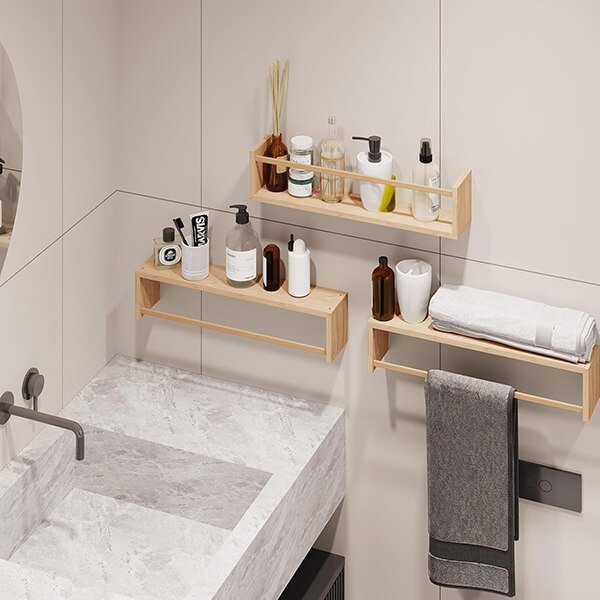
The wall-mounted design offers an ideal storage solution for small spaces, allowing you to neatly organize bathroom essentials such as toiletries or folded towels. This design makes clever use of vertical space, embodying the concept of efficient bathroom storage. For small bathrooms, this shelving unit is a reliable choice for keeping everyday essentials organized; it frees up counter space while ensuring items remain within easy reach. With proper care, this bamboo unit will long serve as a blend of aesthetic appeal and practicality.
A bamboo shelf can serve your bathroom well when you treat, seal, and care for it. Remember one limit: bamboo struggles in very damp rooms with poor airflow. If your space stays wet and airless, choose metal or plastic instead.
Pick bamboo for style, price, and sustainability. Pick metal or plastic for low-maintenance needs. Match the shelf to your conditions and habits. A stylish and practical storage solution starts with an honest look at your space. Your daily routine decides how long any shelf lasts.
FAQ
How long does a bamboo shelf last in a bathroom?
A sealed bamboo shelf in a ventilated room can last a long time. Untreated bamboo in a damp, airless room may fail quickly. Sealing, airflow, and regular drying decide the outcome. Wipe the surface after showers and reapply a protective finish once a year or every 18 months.
Does bamboo swell when it gets wet?
Yes. Bamboo absorbs moisture and expands. It reaches roughly 14% moisture content at 80°F and 70% relative humidity. That cycle of swelling and shrinking weakens fibers over time. A good sealant blocks water from entering, which keeps the material stable through daily steam.
Is bamboo strong enough to hold towels and toiletries?
Yes. Strand woven Moso bamboo rates between 3,000 and 5,000 lbf on the Janka scale. That beats teak at 1,070 lbf and white oak at 1,360 lbf. A wall-mounted design handles daily loads well. Keep heavy items centered and check the mounting hardware regularly.
How do I stop mold from growing on a bamboo shelf?
Control the humidity first. Run a fan, open a window, or leave the door ajar after showers. Keep indoor humidity between 40% and 60%. Wipe the surface dry within 30 seconds of splashes. Clean monthly with mild soap, and check corners and the underside for early discoloration.
Where should I put a bamboo shelf in a small bathroom?
Place it away from the direct shower spray. A wall-mounted unit frees counter space and uses vertical space well. Use it for toiletries, folded towels, or small plants. This storage approach supports tidy organization in a compact room. Air must move freely around the shelf to prevent trapped moisture.