Bamboo dinnerware is popular with people who want safe and eco-friendly things for their kitchens. About 58% of shoppers now pick eco-friendly and biodegradable products instead of plastic or ceramic items. Many families want dinnerware that is strong, easy to use, and simple to clean. Parents wonder if these products are good for kids and if they help the environment. People think bamboo dinnerware is useful and nice-looking for daily meals.
Key Takeaways
- Bamboo dinnerware is safe for families. It does not have bad chemicals like BPA or phthalates. This makes it good for kids.
- Bamboo is good for the planet and breaks down easily. It goes away in compost in a few months. This helps cut down on trash and helps nature.
- Bamboo dinnerware is strong and simple to clean. It does not get stains or smells. It works well for daily use and outside fun.
- Always look for food safety labels when you buy bamboo dinnerware. This shows the items do not have bad stuff in them.
- Buying good bamboo dinnerware saves money in the long run. It lasts longer and you do not need to buy new ones often.
Safety of bamboo dinnerware
Food safety
Bamboo dinnerware is a popular choice for people who want safe kitchen items. Many families pick it to avoid bad chemicals. Scientists have checked bamboo dinnerware and compared it to melamine and plastic dishes. The table below shows what they found:
| Finding | Detail |
|---|---|
| Contaminant | Melamine detected in 32% of bamboo dishes |
| Migration | Melamine migration into hot lemon tea and orange juice documented |
| Pesticide residues | Detected in several bio-based dishes |
| Safety concerns | Persist for bio-based tableware marketed as ‘natural’ |
These results show that some bamboo dinnerware has melamine or pesticide leftovers. People should buy products made from solid bamboo with no extra plastics or resins. Food safety rules in the United States and Europe help keep people safe. For example:
- Bamboo is not on the list of 17 Food Contact Materials in Annex I of Framework Regulation (EC) 1935/2004 in the EU.
- Solid bamboo products must follow Regulation EC No. 1935/2004 and national laws about varnishes and glues.
- Makers must use food-safe surface treatments and adhesives.
Some countries in Europe, like Belgium and the Netherlands, do not allow bamboo-melamine plastics for food contact. These rules help keep dinnerware safe for everyone.
Chemical-free benefits
Many people pick bamboo dinnerware because it does not have the bad chemicals found in plastic or melamine dishes. Most solid bamboo plates and bowls do not have PFAS, PFOA, or BPA. These chemicals can cause health problems if they get into food.
Natural bamboo dinnerware does not have BPA or phthalates. These chemicals can mess with hormones and cause problems having babies. Safety experts say not to use melamine-based materials for hot food because bad stuff can get into your meal. People should choose high-quality, certified bamboo dinnerware for the best safety.
Safe for families
Bamboo dinnerware is a safe pick for families, especially for kids and babies. Doctors and health experts often say bamboo products are good because they are better for the planet and lower the risk of bad chemicals. Bamboo dinnerware does not have BPA or phthalates, so it is safer for young children. Natural bamboo plates are non-toxic and safe for eating. Parents should always check for certifications and pick products without melamine or unsafe glues.
Tip: Always read product labels and pick bamboo dinnerware that is certified food-safe. This helps keep your family safe.
Bamboo dinnerware also works well with heat and water. Solid bamboo does not crack easily and does not soak up water. This makes it a smart and safe choice for everyday meals.
Durability and usability of bamboo dinnerware
Everyday performance
Bamboo dinnerware is strong for daily use. It does not chip or crack easily. Many families like it because kids can use it safely. The material is thick and does not let liquids soak in. Juices and sauces stay on the surface. This makes cleaning simple. Smells do not stick to the plates or bowls. Bamboo dinnerware also stops germs from growing. This helps keep food safe. People usually wash these dishes with mild soap and rinse them fast. Using strong cleaners or very hot water can damage them. Gentle washing is best.
- Bamboo dinnerware stays strong and does not break easily.
- The surface does not let stains or smells stay.
- You can clean it with mild soap and water.
Handling hot and cold foods
Bamboo dinnerware works well with warm foods. Good bamboo does not have formaldehyde. This makes it safer than melamine or plastic. The table below shows how different materials handle hot foods:
| Material | Handling of Hot Foods | Chemical Safety |
|---|---|---|
| Bamboo | Safe for warm foods, but can leach chemicals at high temperatures | High-quality bamboo avoids formaldehyde |
| Melamine | Not safe for hot foods; can release harmful chemicals when heated | Contains formaldehyde, unstable at high temperatures |
Bamboo dinnerware is good for warm or cold foods. Do not use it for boiling hot meals. This helps stop chemicals from getting into your food.
Longevity
How long bamboo dinnerware lasts depends on how it is made. It also depends on how often you use it and how you clean it. If you take care of it, bamboo plates and bowls last for years. Keep them in a dry place and clean them gently. Bamboo dinnerware is light, so you can carry it to picnics or outside. It is a smart choice for families who want strong and easy-to-carry dishes.
Tip: Keep bamboo dinnerware dry and use gentle cleaners. This helps it last longer.
Environmental impact of bamboo dinnerware
Sustainable materials
Bamboo grows fast and does not need much water. Farmers can cut bamboo every few years. The plant keeps growing after harvest. This makes bamboo a renewable resource. Many companies use bamboo fiber to make plates and bowls. Sometimes, they mix it with corn starch. These materials come from plants, not oil. They help people use less fossil fuel.
People compare bamboo dinnerware to plastic and ceramic. The table below shows how each type affects the planet:
| Type of Dinnerware | Environmental Impact |
|---|---|
| Bamboo | Biodegradable, renewable, reduces landfill waste and carbon footprints |
| Plastic | Contributes to pollution, takes hundreds of years to decompose, often contains harmful chemicals |
| Ceramic & Porcelain | Requires high energy for manufacturing, prone to breakage, leading to waste |
Bamboo dinnerware is special because it comes from renewable sources. It also breaks down faster than plastic or ceramic.
Biodegradability
Bamboo dinnerware breaks down in nature. When people throw it away, it does not stay in landfills for a long time. Plastic can stay for hundreds of years. In a home compost bin, bamboo plates and bowls break down in 4 to 12 months. In commercial composting, it is even faster.
Note: The time depends on how thick the dinnerware is and the composting conditions.
Many brands get certifications for their products. These show the dinnerware is safe for composting and comes from good sources. Some common certifications are:
| Certification | Description |
|---|---|
| BPI | Biodegradable Products Institute certification, indicating compostability. |
| TÜV OK Compost | Certification ensuring products meet compostability standards. |
| FSC | Forest Stewardship Council certification, promoting responsible forest management. |
| OEKO-TEX | Certification for textiles tested for harmful substances. |
| USDA BioPreferred | Indicates products made from renewable resources. |
These certifications help shoppers trust the dinnerware will not hurt the planet.
Water-saving production
Bamboo uses less water to grow than other crops. Farmers do not need to water bamboo fields as much as cotton or trees. This saves water and helps the earth. Making bamboo dinnerware also uses less energy than making ceramic or porcelain dishes. Those dishes need high heat in kilns. By picking bamboo, families help save water and lower their carbon footprint.
Choosing bamboo dinnerware helps keep the planet clean and cuts down on waste.
The ease of use and cleanability of bamboo dinnerware
Lightweight design
Bamboo dinnerware is light. Kids and older people can carry it easily. Families use bamboo plates for picnics and eating outside. The light weight makes packing simple. Stacking plates is easy too. Bamboo plates are good for camping because they do not make bags heavy.
Microwave and dishwasher compatibility
Most bamboo dinnerware should not go in the microwave. Makers say microwaving bamboo can crack or bend the plates. Sometimes, it can even release bad stuff.
Some bamboo plates can go in the top rack of a dishwasher. Most experts say hand washing is better. Hot water and strong soap can hurt the surface. Always check the label before using a dishwasher.
Easy maintenance
Cleaning bamboo dinnerware is easy. The surface does not soak up colors or smells. People wash plates with warm water and mild soap. Use a soft sponge to clean them. Dry the plates with a towel. Let them stand upright to air-dry. Here are the best ways to clean bamboo dinnerware:
- Wash with warm water and mild dish soap.
- Use a soft sponge or cloth.
- Dry immediately with a towel.
- Air-dry upright for complete drying.
- Clean spills quickly to prevent stains.
- Apply food-safe mineral oil every few weeks.
- Store in a cool, dry place.
Bamboo plates do not scratch much. They do not hold bacteria or stains like plastic. Ceramic plates can chip, but bamboo stays strong if you take care of it. People find bamboo dinnerware easy to clean and use every day.
Tip: Put mineral oil on bamboo plates often. This keeps them looking new and stops them from drying or cracking.
Cost and value of bamboo dinnerware
Price comparison
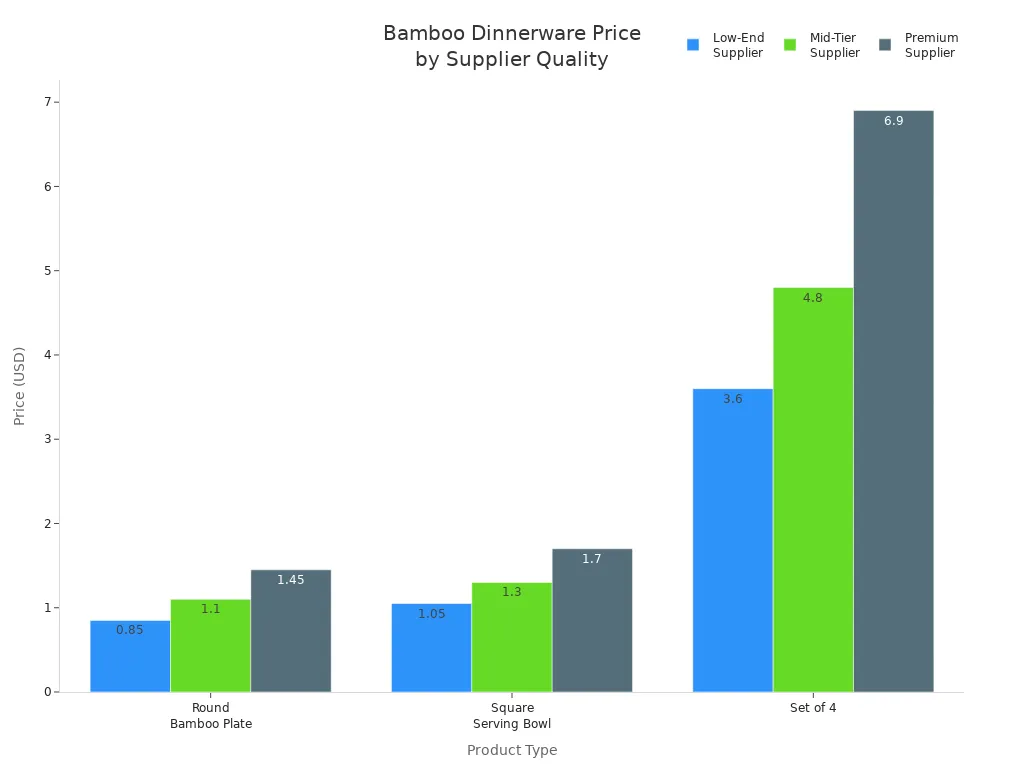
People often check prices before buying dinnerware. Bamboo dinnerware costs different amounts. The price depends on who sells it and how good the materials are. Some brands sell simple plates and bowls for less money. Other brands use better bamboo and special coatings, so their products cost more. The table below shows how prices change with different suppliers:
| Product Type | Low-End Supplier | Mid-Tier Supplier | Premium Supplier |
|---|---|---|---|
| Round Bamboo Plate (20cm) | $0.85/unit | $1.10/unit | $1.45/unit |
| Square Serving Bowl (18cm) | $1.05/unit | $1.30/unit | $1.70/unit |
| Set of 4 (Plate + Bowl + Cutlery) | $3.60/set | $4.80/set | $6.90/set |
Many things change the price:
- Material Quality: Premium sellers use older, dried bamboo. This helps stop cracking and bending.
- Finishing Process: Special coatings or plant sealants make plates last longer and resist water.
- Customization: Adding names or shapes costs more but makes plates unique.
Families can pick what fits their budget and needs.
Long-term value
Bamboo dinnerware is a good deal over time. The material does not break or chip easily. People can use these plates for years if they take care of them. Premium plates last longer because they use better bamboo and finishes. They cost more at first, but you do not need to buy new plates often. This saves money later.
Tip: Buying better bamboo dinnerware helps families spend less on replacing broken plates.
Bamboo dinnerware is also good for the planet. People who want to help the environment like that bamboo breaks down naturally and uses less energy to make. Bamboo plates are strong and eco-friendly, so they are smart for homes and outdoor parties.
Bamboo dinnerware is strong and good for the planet. It also looks nice on the table. Families like that it is light and simple to wash. Experts say it is great for everyday meals and eating outside. It is also safe for kids to use. People should look for food safety labels before buying. They should not pick plates with bad chemicals. The table below shows the good and bad sides:
| Advantages | Disadvantages |
|---|---|
| Durable, eco-friendly | Chemical contamination risk |
| Easy to clean, attractive | Limited moisture resistance |
People need to think about what they want. They should check the material and how to care for it before picking bamboo dinnerware.
FAQ
Is bamboo dinnerware safe for children?
Bamboo dinnerware does not have BPA or phthalates. Parents like it for kids because it does not crack easily. It also does not let bad chemicals get into food. Always look for food-safe labels before you buy.
Can bamboo plates go in the dishwasher?
Most bamboo plates need to be washed by hand. Some brands say you can use the top rack of the dishwasher. Hot water and strong soap can hurt the surface. Always read the label for cleaning rules.
Does bamboo dinnerware break easily?
Bamboo dinnerware does not chip or crack much. It stays strong when you use it every day. People use it for picnics and eating outside because it is light and tough.
Is bamboo dinnerware compostable?
Bamboo dinnerware breaks down in compost bins. At home, it takes four to twelve months. In big compost places, it breaks down faster. Look for compostable labels to make sure you can compost it.
How does bamboo dinnerware compare to plastic?
Bamboo dinnerware comes from plants that grow back. Plastic plates take a long time to break down. Bamboo plates break down faster and do not have bad chemicals. Many families pick bamboo because it is better for the earth.